Photo by Bill Huddleston
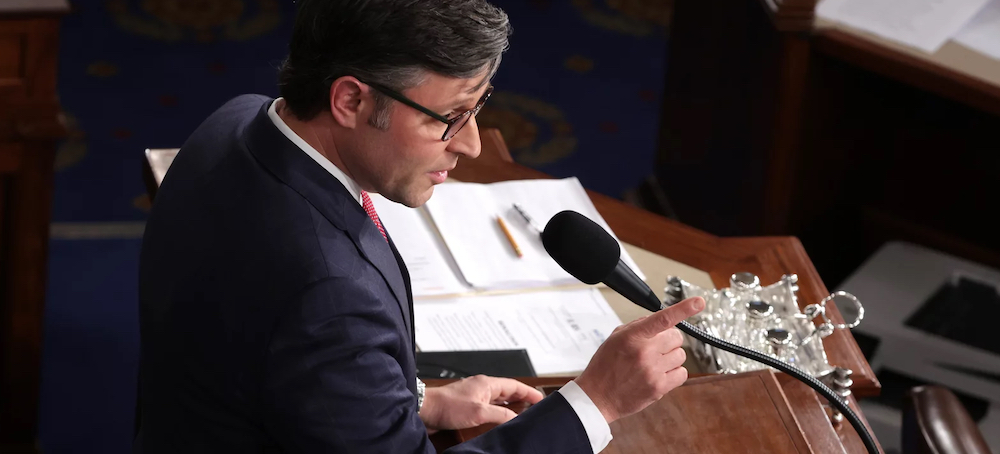
Gazette photographer Bill Huddleston recently visited the Bay Area. This shot of the Golden Gate Bridge is one of the gems he brought home.
Monday, February 8, 2010
STAR VALLEY CANDIDATES DEBATE IS ON
Event is Tuesday,
Feb. 9 at Star Valley
Baptist Church
The Rim Country Gazette Blog, KRIM-FM and the Mogollon Connection (the new newspaper coming to the Rim Country Feb. 10) are sponsoring a debate between the candidates for Star Valley mayor and town council from 6-7:30 p.m. Tuesday, Feb. 9, at Star Valley Southern Baptist Church, 4180 E. Arizona Highway 260.
The debate is free and open to the public. The format will consist of timed opening and closing statements, and five questions asked of each candidate.
Gazette Editor Jim Keyworth and Connection Editor Matt Brabb will moderate.
Since time is short, please help spread the word to your Star Valley neighbors.
Feb. 9 at Star Valley
Baptist Church
The Rim Country Gazette Blog, KRIM-FM and the Mogollon Connection (the new newspaper coming to the Rim Country Feb. 10) are sponsoring a debate between the candidates for Star Valley mayor and town council from 6-7:30 p.m. Tuesday, Feb. 9, at Star Valley Southern Baptist Church, 4180 E. Arizona Highway 260.
The debate is free and open to the public. The format will consist of timed opening and closing statements, and five questions asked of each candidate.
Gazette Editor Jim Keyworth and Connection Editor Matt Brabb will moderate.
Since time is short, please help spread the word to your Star Valley neighbors.
The old 'no interest payments for 2 years' gimmick
By Sam Schwalm
Gazette Columnist
(The precipitation chart that shows the big storm in January can be found here: http://www.waterforpinestrawberry.com/Hydrology.htm)
In the last two articles, we have looked at how the Pine Strawberry Water Improvement District (PSWID) plans to subsidize the water rates with property taxes and borrowed money. We also looked at how the District is significantly understating operations expenses by about $150,000 per year and how operations cost growth is being selectively applied to make the operations costs look better over time.
In this article we will look at what the revenue would need to be if the subsidies are removed and realistic operations costs are used. The community is stuck with the no interest payments for two years gimmick, so that has been left in. The details of the analysis for the first five years can be found here: http://www.waterforpinestrawberry.com/data%20pages/BudgetDocs.htm . The promises of additional borrowings by the Board have not been included in this analysis. As in the earlier emails, there are only nine months of operations in Fiscal Year Ending (FYE) 2010.
The adjustments needed to the revenues in the Economists.com rate analysis are as follows:
Remove the $25,000 a year being put into the Rate Stabilization fund.
Add $100,000 per year to the operations cost. Comment: Being optimistic that the Board can be more frugal than the $150,000 understatement that WFPS has estimated. If not, then everything is higher.
Use a constant 3.6 percent cost growth rate instead of skipping/reducing some years and not others as is done in the Economists.com analysis. The adjustment for this grows from $30,283 in FYE 2011 to $44,726 in FYE 2014.
Adjust for changes in the amount of debt service when the Compass Bank loans are refinanced at the end of the third year. Debt service in FYE 2013 and FYE 2014 actually drops by about $132,000 a year due to the assumption that the major portion is refinanced with 30 year bonds, instead of the 20 year amortization of the current loan. That change in duration adds about $1.9 million to the total cost.
Once the adjustments are applied and the property tax and borrowed money subsidies are removed, the increase in the water rate revenue needed (and the percentage increase over the water rate revenue estimated by Economists.com) is as follows:
FYE 2010: $349,000 (42.1%)
FYE 2011: $308,883 (27.8%)
FYE 2012: $364,446 (29.4%)
FYE 2013: $95,976 (6.5%)
FYE 2014: $53,510 (3.2%)
It should be noted that the revenue shortfall in the later years decreases because of the rate increases that the Economists.com analysis has proposed and the reduced debt service kicks in.
To give some context, selling a million gallons of water at the current Pine summer rates brings in $6,744 of revenue, on average. Raising the monthly base rate for all meters by $1 a month would bring in $39,012 in additional revenue for a year. Clearly, the revenue shortfalls would have a significant immediate impact on water rates if those rates were not being subsidized with property tax and borrowed money.
So what would the water rate increases be without the subsidies? Assuming that it is too late to do anything about FYE 2010, the water rate increases would be:
FYE 2011:
Pine Summer: 13.9%
Pine Winter: 36.2%
Strawberry E&R: 39.6%
Strawberry Williamson: 88.7%
Strawberry United: 38.2%
FYE 2012: 12.4%
FYE 2013: 0.0%
FYE 2014: 5.4%
FYE 2011 reflects all customers moving to the same set of rates, which are 13.9 percent higher than the current Pine summer rate. The percentages are based upon the increase in the cost of using 3,000 gallons per month. Mitigating some of the impact of this is that the District doesn’t have its hand in your pocket for property taxes and more of the borrowed money can go for actual improvements or debt reduction.
This article is from the group Water For Pine Strawberry. We will be providing an article after each of the PSWID meetings with a summary of what the board did, additional facts that are relevant to what went on, and some commentary. Please refer friends and neighbors who are interested in the local water issues to the blog. Articles on earlier meetings can be accessed by clicking the WATER tab to the right.
Water For Pine Strawberry is a group of residents concerned about the communities water issues and how they can best be resolved. Visit our web site, http://www.waterforpinestrawberry.com/, for more information. The website for PSWID is http://www.pswid.org/ .
Clarifications can be submitted by anyone who is explicitly named, implicitly identifiable, or a board member to items in this article. Clarifications will be posted on our website. We reserve the right to post a response. Clarifications must deal with the topics discussed in the email that relate to the individual or the board. They must be in family friendly language and be non-abusive. When the clarification is accepted, it will be posted to the website and notice of that posting will be added to the next email.
Gazette Columnist
(The precipitation chart that shows the big storm in January can be found here: http://www.waterforpinestrawberry.com/Hydrology.htm)
In the last two articles, we have looked at how the Pine Strawberry Water Improvement District (PSWID) plans to subsidize the water rates with property taxes and borrowed money. We also looked at how the District is significantly understating operations expenses by about $150,000 per year and how operations cost growth is being selectively applied to make the operations costs look better over time.
In this article we will look at what the revenue would need to be if the subsidies are removed and realistic operations costs are used. The community is stuck with the no interest payments for two years gimmick, so that has been left in. The details of the analysis for the first five years can be found here: http://www.waterforpinestrawberry.com/data%20pages/BudgetDocs.htm . The promises of additional borrowings by the Board have not been included in this analysis. As in the earlier emails, there are only nine months of operations in Fiscal Year Ending (FYE) 2010.
The adjustments needed to the revenues in the Economists.com rate analysis are as follows:
Remove the $25,000 a year being put into the Rate Stabilization fund.
Add $100,000 per year to the operations cost. Comment: Being optimistic that the Board can be more frugal than the $150,000 understatement that WFPS has estimated. If not, then everything is higher.
Use a constant 3.6 percent cost growth rate instead of skipping/reducing some years and not others as is done in the Economists.com analysis. The adjustment for this grows from $30,283 in FYE 2011 to $44,726 in FYE 2014.
Adjust for changes in the amount of debt service when the Compass Bank loans are refinanced at the end of the third year. Debt service in FYE 2013 and FYE 2014 actually drops by about $132,000 a year due to the assumption that the major portion is refinanced with 30 year bonds, instead of the 20 year amortization of the current loan. That change in duration adds about $1.9 million to the total cost.
Once the adjustments are applied and the property tax and borrowed money subsidies are removed, the increase in the water rate revenue needed (and the percentage increase over the water rate revenue estimated by Economists.com) is as follows:
FYE 2010: $349,000 (42.1%)
FYE 2011: $308,883 (27.8%)
FYE 2012: $364,446 (29.4%)
FYE 2013: $95,976 (6.5%)
FYE 2014: $53,510 (3.2%)
It should be noted that the revenue shortfall in the later years decreases because of the rate increases that the Economists.com analysis has proposed and the reduced debt service kicks in.
To give some context, selling a million gallons of water at the current Pine summer rates brings in $6,744 of revenue, on average. Raising the monthly base rate for all meters by $1 a month would bring in $39,012 in additional revenue for a year. Clearly, the revenue shortfalls would have a significant immediate impact on water rates if those rates were not being subsidized with property tax and borrowed money.
So what would the water rate increases be without the subsidies? Assuming that it is too late to do anything about FYE 2010, the water rate increases would be:
FYE 2011:
Pine Summer: 13.9%
Pine Winter: 36.2%
Strawberry E&R: 39.6%
Strawberry Williamson: 88.7%
Strawberry United: 38.2%
FYE 2012: 12.4%
FYE 2013: 0.0%
FYE 2014: 5.4%
FYE 2011 reflects all customers moving to the same set of rates, which are 13.9 percent higher than the current Pine summer rate. The percentages are based upon the increase in the cost of using 3,000 gallons per month. Mitigating some of the impact of this is that the District doesn’t have its hand in your pocket for property taxes and more of the borrowed money can go for actual improvements or debt reduction.
This article is from the group Water For Pine Strawberry. We will be providing an article after each of the PSWID meetings with a summary of what the board did, additional facts that are relevant to what went on, and some commentary. Please refer friends and neighbors who are interested in the local water issues to the blog. Articles on earlier meetings can be accessed by clicking the WATER tab to the right.
Water For Pine Strawberry is a group of residents concerned about the communities water issues and how they can best be resolved. Visit our web site, http://www.waterforpinestrawberry.com/, for more information. The website for PSWID is http://www.pswid.org/ .
Clarifications can be submitted by anyone who is explicitly named, implicitly identifiable, or a board member to items in this article. Clarifications will be posted on our website. We reserve the right to post a response. Clarifications must deal with the topics discussed in the email that relate to the individual or the board. They must be in family friendly language and be non-abusive. When the clarification is accepted, it will be posted to the website and notice of that posting will be added to the next email.
Green Valley Lakes 'very murky' following storms
Photo courtesy Arizona Game & Fish
Recent water quality test results from 20 out of 21 Urban Fishing Program waters were in the good to excellent range, meaning that all lakes are approved for fish stocking. Recent weather events brought large amounts of runoff into some lakes. For many lakes, the fresh water helped to improve oxygen levels and lower the pH levels making for better fishing conditions.
However, a few lakes became more turbid from suspended soil sediments brought in from runoff or muddy water from the canals. Green Valley Lakes in Payson and Lakeside Lake in Tucson each experienced a high amount of runoff from large urban watersheds. Both of these lakes spilled over large amounts of water and remain very murky from all the suspended clay and silt. Trout stockings at Lakeside Lake have been cancelled from January 22 through Feb. 20 due to low oxygen levels, low visibility and floating debris.
All of Lakeside’s trout are being distributed as extras to Kennedy, Silverbell and Sahuarita Lakes. At Green Valley Lakes, trout stockings have continued, however anglers have noted that murky waters are making it difficult for the sight feeding trout to find their baits.
URBAN FISHING REPORT
Fishing for trout continues to be good to excellent at most Urban Fishing Program waters. Winter storms have invigorated the trout and anglers willing to brave the weather are rewarded with good action and little competition.
Anglers using scented dough baits (such as PowerBait), worms fished under a bobber, corn on the bottom, or small trout lures have been successful. Small spinners such as Rooster Tails and Panther Martins, or spoons such as Super Dupers are also working well for trout, especially during periods just before and after storms.
Best times to fish for trout generally are early morning, but some anglers have reported excellent fishing late afternoon.
Lake waters at Green Valley (Payson) and Lakeside (Tucson) are brown colored and murky due to the high runoff from recent storms—making fishing tough. Lakeside Lake will not be stocked for another two weeks, so anglers are advised to try Kennedy, Silverbell or Sahuarita Lakes that are each getting some of the extra fish. Trout continue to be stocked at Green Valley Lakes, but until the water clears up a bit more, the fishing is expected to remain slow.
WEBSITE LOADED WITH FISHING INFO
If you haven’t visited the Game and Fish website recently, you’ve been missing out on some great fishing information. In addition to weekly fishing reports, stocking schedules, big fish-of-the-year, state records, and newsletters, there is much more to be found. An interactive fishing map can be used to guide you to lakes and streams all over the state and let you know what you can catch there. A fishing blog provides a forum for interactive fish talk. Fishing photos can be submitted to show off your latest catch or to brag on your kids. A "Send Comments" section allows you to ask a department biologist a question. E-mail bfishing@azgfd.gov to submit your own fishing report on your last outing. And don’t forget to check out the Outdoor Calendar for great ideas for things to do across Arizona. All of this and more can be found at www.azgfd.gov.
Labels:
ENTERTAINMENT,
LOCAL NEWS,
MAIN STREET,
PARKS/REC,
STATE NEWS,
WATER
Carpenter, Vogel up next at CAC meeting
Payson Town Council candidates Fred Carpenter and Mike Vogel will be the guest speakers at the next meeting of the Citizens Awareness Committee (CAC) scheduled for 2 p.m. Thursday, Feb. 11 at the Payson Public Library.
The CAC Board has submitted questions for each speaker to provide his viewpoint. The meeting will be in a forum format conducted by a CAC moderator. The topics contained in the questions are deemed important to the future of Payson.
Upon completion of answers, attendees may ask questions and the speakers may make comments.
Payson citizens are encouraged to attend!
The CAC Board has submitted questions for each speaker to provide his viewpoint. The meeting will be in a forum format conducted by a CAC moderator. The topics contained in the questions are deemed important to the future of Payson.
Upon completion of answers, attendees may ask questions and the speakers may make comments.
Payson citizens are encouraged to attend!
BLM renewable energy project meetings begin
PHOENIX – The Bureau of Land Management (BLM) in Arizona is holding a series of public meetings statewide to get comments on its Restoration Design Energy Project.
The intent of the project is to identify disturbed or previously developed sites that could be made suitable for renewable energy projects. Among potential sites that could qualify:
· Brownfields or other areas that have been contaminated by hazardous
materials
· Abandoned mines
· Former landfills
· Gravel pits
· Damaged areas with limited restoration potential
At the meetings, members of the public and representatives of government and tribal agencies will get information on the project. They will also have the chance to comment on what should be included in an environmental impact statement that will be prepared on the project. The EIS will address both existing remediation needs and the potential for renewable energy generation.
The Restoration Design Energy Project is funded under the American Recovery and Reinvestment Act of 2009 (ARRA). The project will support the Secretary of the Interior’s goals to build America’s energy resources and to protect and restore treasured landscapes.
The closest meetings:
Mon. Feb. 8, 5:30 p.m., BLM AZ state office, 1 N. Central, Suite 800, Phoenix.
Thurs., Feb. 11, 7-9 p.m., Arizona Game & Fish, Quail Room, 5000 W. Carefree Hwy., Phoenix.
Mon., Feb. 22, 5-7 p.m., Pioneer Jr. College Theater, 1610 S. Main, Snowflake.
Tues., Feb. 23, 6:30-8:30 p.m., Coconino High School Theater, 2801 N. Izabel, Flagstaff.
Comments also can be made prior to the close of the public comment period, March 11, by mail or by e-mail. Comments will become part of the official public record and may be included as part of the environmental impact statement.
· Mail comments: Restoration Design Energy Project, Attention: Teri
Raml, Project Manager, BLM Arizona State Office, One North Central Avenue, Suite 800, Phoenix, Arizona 85004.
· E-mail comments: az_arra_rdep@blm.gov.
For additional information, visit the project website at:
http://www.blm.gov/az/st/en.html and click on Restoration Design Energy Project or contact Teri Raml, Project Manager for the Restoration Design Energy Project at (602) 417-9388 or teri_raml@blm.gov.
The BLM manages more land – 256 million acres – than any other Federal agency. This land, known as the National System of Public Lands, is primarily located in 12 Western States, including Alaska. The BLM, with a budget of about $1 billion, also administers 700 million acres of sub-surface mineral estate throughout the nation. The BLM’s multiple-use mission is to sustain the health and productivity of the public lands for the use and enjoyment of present and future generations. The BLM accomplishes this by managing such activities as outdoor recreation, livestock grazing, mineral development, and energy production, and by conserving natural, historical, cultural, and other resources on public lands.
The intent of the project is to identify disturbed or previously developed sites that could be made suitable for renewable energy projects. Among potential sites that could qualify:
· Brownfields or other areas that have been contaminated by hazardous
materials
· Abandoned mines
· Former landfills
· Gravel pits
· Damaged areas with limited restoration potential
At the meetings, members of the public and representatives of government and tribal agencies will get information on the project. They will also have the chance to comment on what should be included in an environmental impact statement that will be prepared on the project. The EIS will address both existing remediation needs and the potential for renewable energy generation.
The Restoration Design Energy Project is funded under the American Recovery and Reinvestment Act of 2009 (ARRA). The project will support the Secretary of the Interior’s goals to build America’s energy resources and to protect and restore treasured landscapes.
The closest meetings:
Mon. Feb. 8, 5:30 p.m., BLM AZ state office, 1 N. Central, Suite 800, Phoenix.
Thurs., Feb. 11, 7-9 p.m., Arizona Game & Fish, Quail Room, 5000 W. Carefree Hwy., Phoenix.
Mon., Feb. 22, 5-7 p.m., Pioneer Jr. College Theater, 1610 S. Main, Snowflake.
Tues., Feb. 23, 6:30-8:30 p.m., Coconino High School Theater, 2801 N. Izabel, Flagstaff.
Comments also can be made prior to the close of the public comment period, March 11, by mail or by e-mail. Comments will become part of the official public record and may be included as part of the environmental impact statement.
· Mail comments: Restoration Design Energy Project, Attention: Teri
Raml, Project Manager, BLM Arizona State Office, One North Central Avenue, Suite 800, Phoenix, Arizona 85004.
· E-mail comments: az_arra_rdep@blm.gov.
For additional information, visit the project website at:
http://www.blm.gov/az/st/en.html and click on Restoration Design Energy Project or contact Teri Raml, Project Manager for the Restoration Design Energy Project at (602) 417-9388 or teri_raml@blm.gov.
The BLM manages more land – 256 million acres – than any other Federal agency. This land, known as the National System of Public Lands, is primarily located in 12 Western States, including Alaska. The BLM, with a budget of about $1 billion, also administers 700 million acres of sub-surface mineral estate throughout the nation. The BLM’s multiple-use mission is to sustain the health and productivity of the public lands for the use and enjoyment of present and future generations. The BLM accomplishes this by managing such activities as outdoor recreation, livestock grazing, mineral development, and energy production, and by conserving natural, historical, cultural, and other resources on public lands.
Sunday, February 7, 2010
Subscribe to:
Posts (Atom)